Homeowner guide • Builder questions • No mystery invoices

Before you build, ask better questions.

A home project can look simple from the outside. Inside the build are scope, permits, bids, allowances, change orders, inspections, trade schedules, punch lists, and a hundred decisions that get expensive when they stay vague.

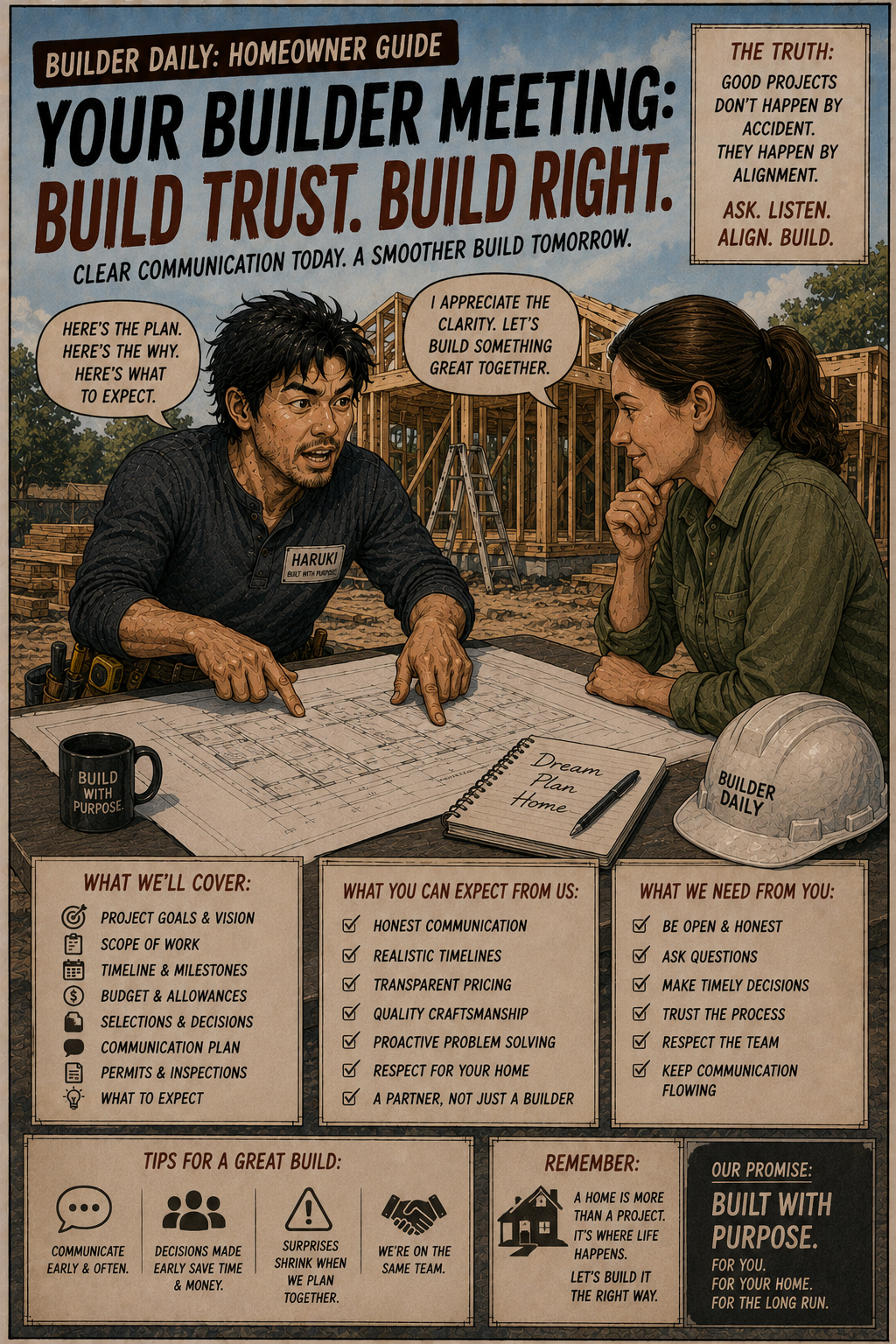
Hammer Haruki explaining construction plans to a homeowner at a folding table on site
The best project meeting happens before the panic Ask early
Start here

The builder is not just pricing a dream.

A builder is pricing drawings, specifications, site conditions, trade labor, materials, schedule risk, inspections, supervision, cleanup, insurance, overhead, and the unknowns still hiding in the project.

The homeowner’s job is not to become a contractor. The homeowner’s job is to ask enough clear questions that expectations become visible before work begins.

  • Ask what is included.
  • Ask what is excluded.
  • Ask what is assumed.
  • Ask what happens when something changes.
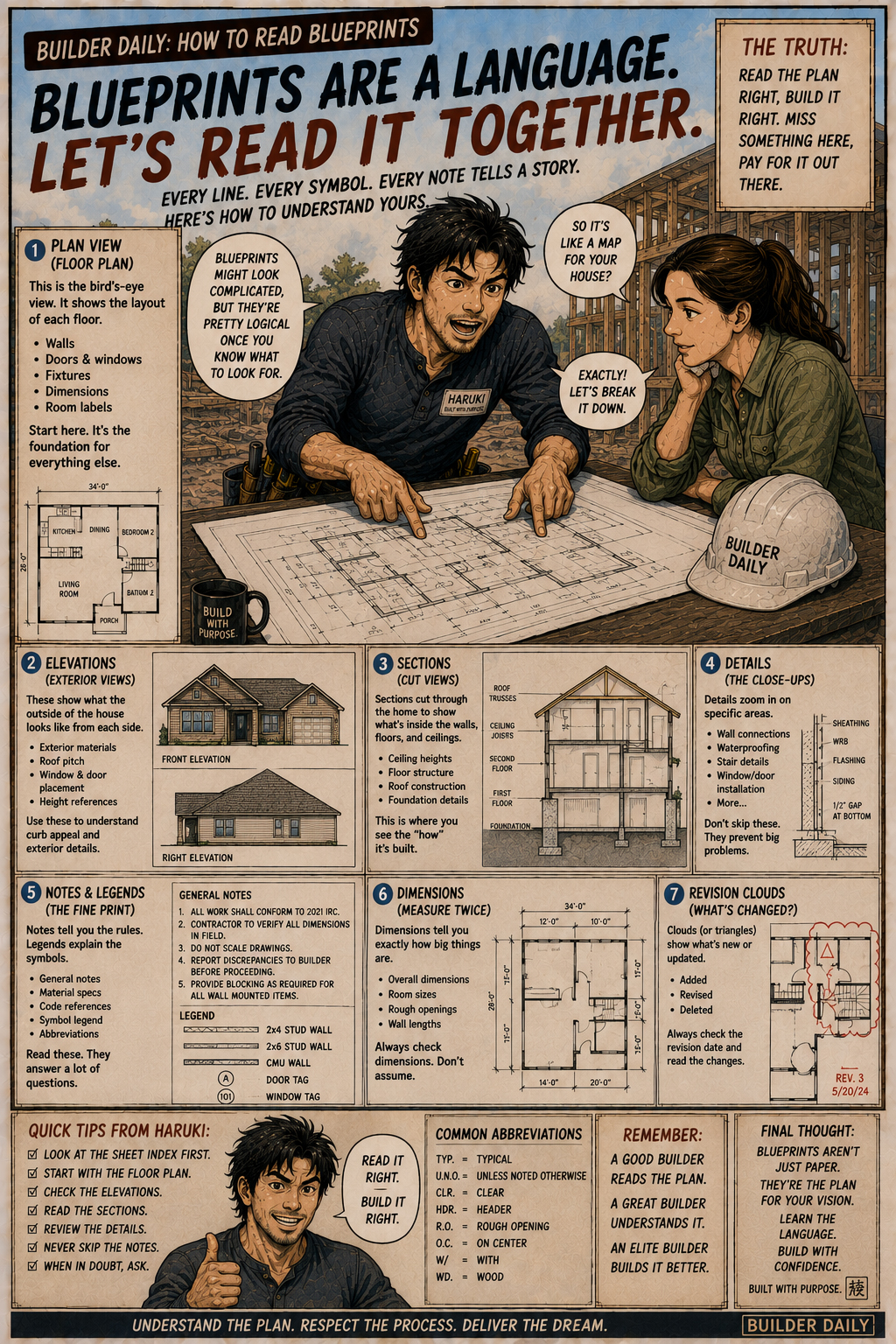
Blueprint spread with manga callouts explaining walls, elevations, sections, and notes
The meeting checklist

Questions to ask before the jobsite starts.

These questions are not awkward. They are cheaper than confusion.

Scope

What exactly is included?

Ask for included work in plain language. Materials, labor, supervision, cleanup, disposal, protection, permits, and finish assumptions should be clear.

Exclusions

What is not included?

Exclusions are where many surprises hide. Ask about engineering, utility work, patching, landscaping, appliances, fixtures, and owner-supplied items.

Plans

Which plan set are we using?

Know whether drawings are preliminary, permit-ready, approved, revised, or still missing key details.

Permits

Who handles permits?

Ask who submits, who responds to corrections, who pays fees, where records are kept, and what inspections are required.

Schedule

What can delay this?

Weather, inspections, lead times, owner selections, trade availability, design changes, and unknown site conditions can all shift the calendar.

Communication

How will decisions be documented?

Email, written approvals, daily notes, photos, and change orders create one shared memory for the project.

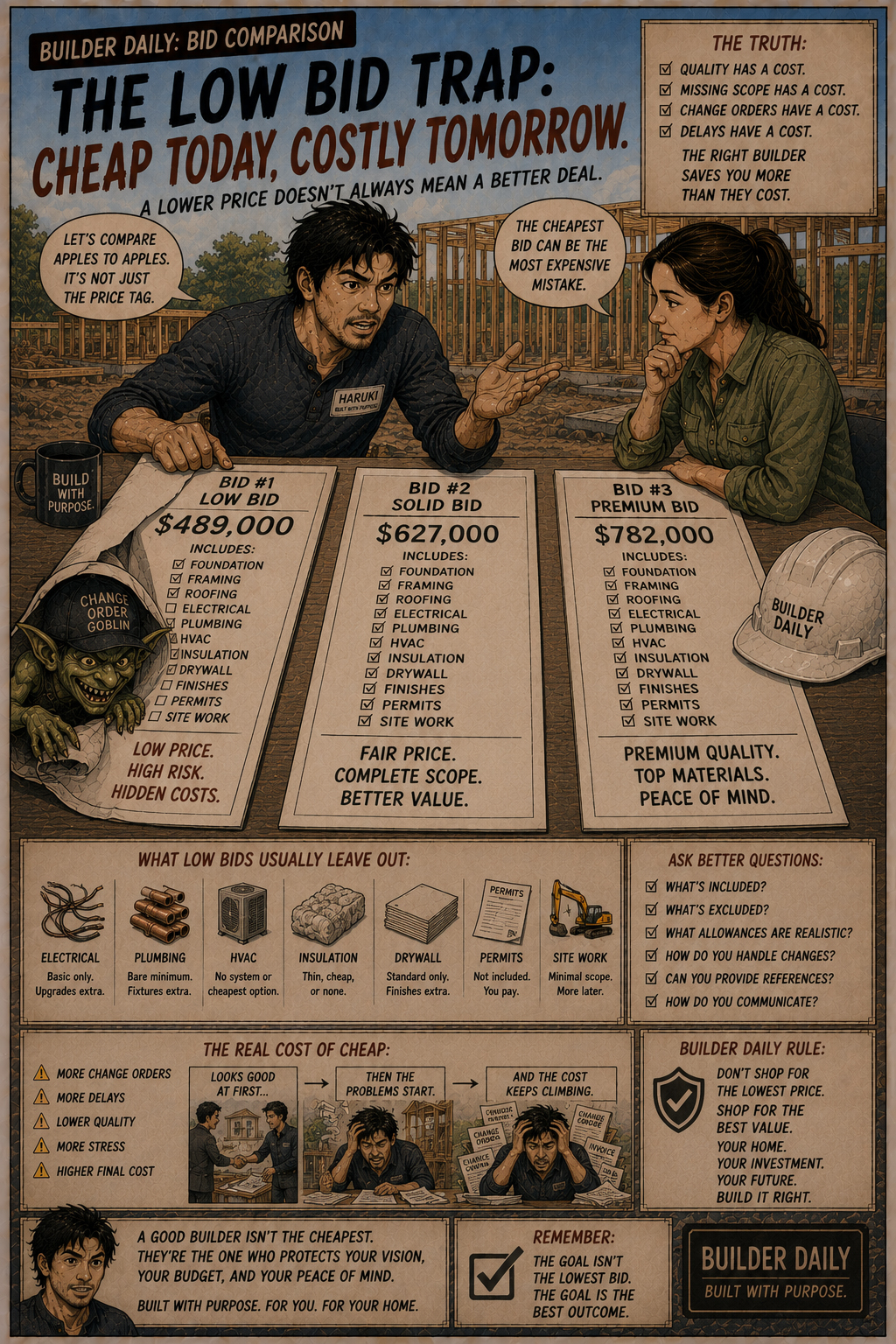
Bid lesson

The lowest number is not automatically the lowest cost.

A bid is not just a price. It is a bundle of scope, assumptions, exclusions, allowances, supervision, schedule, quality, and risk. A cheap bid can be honest. It can also be incomplete.

  • Compare scope line by line.
  • Ask what assumptions were made.
  • Look for missing labor or material categories.
  • Compare allowances before comparing totals.
Three construction bids on a table with the cheapest one hiding a goblin
Homeowner trap map

Six places projects get expensive.

Most budget pain is not one dramatic explosion. It is a chain of unclear decisions.

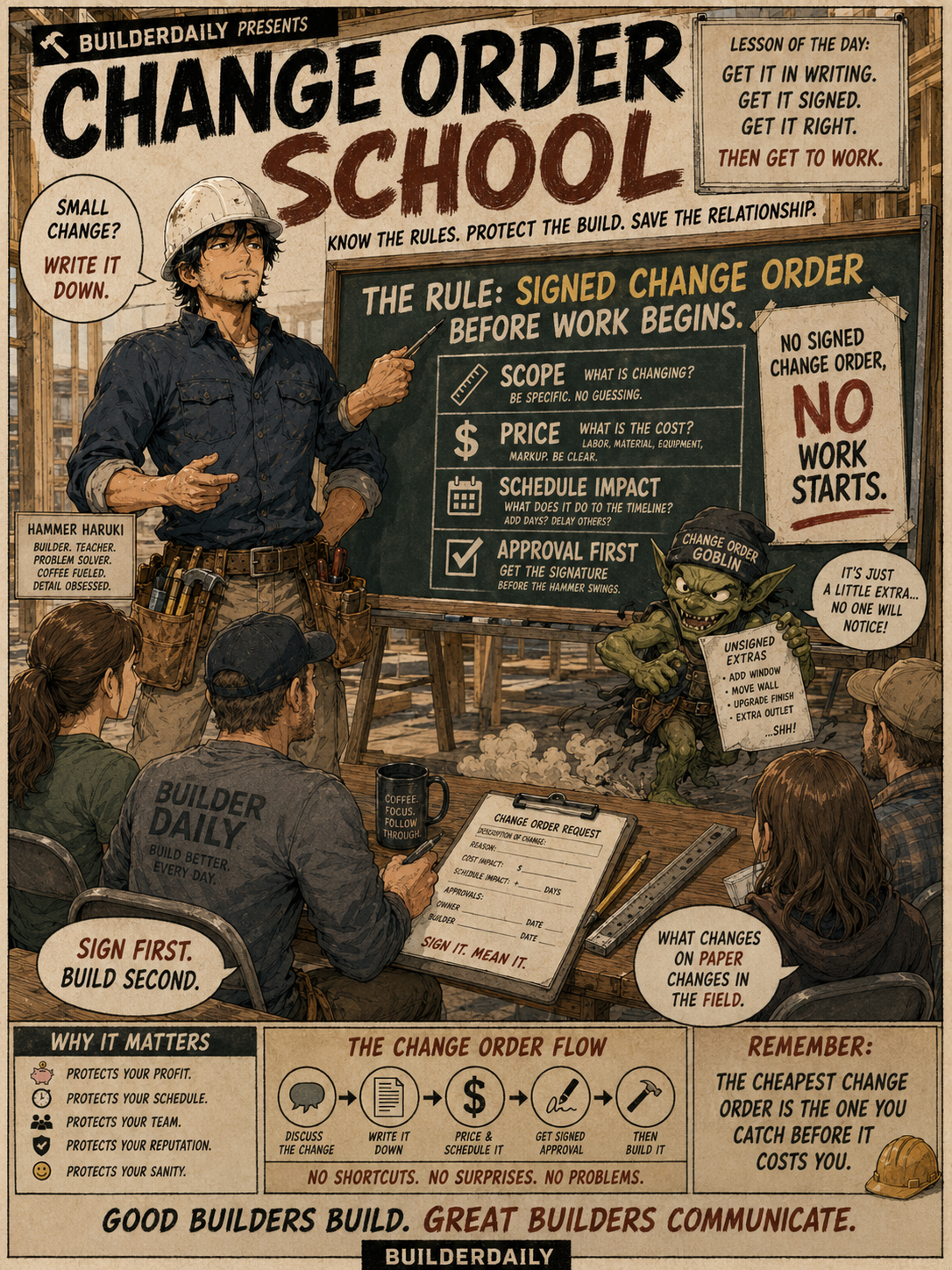
Classroom-style manga scene teaching signed change orders before work begins
Trap 01

Unsigned changes

Changes should define cost, scope, and schedule impact before work moves.

Homeowner choosing finishes while the Budget Gremlin adjusts the numbers
Trap 02

Vague allowances

Know what the allowance covers and whether labor, freight, tax, and install are included.

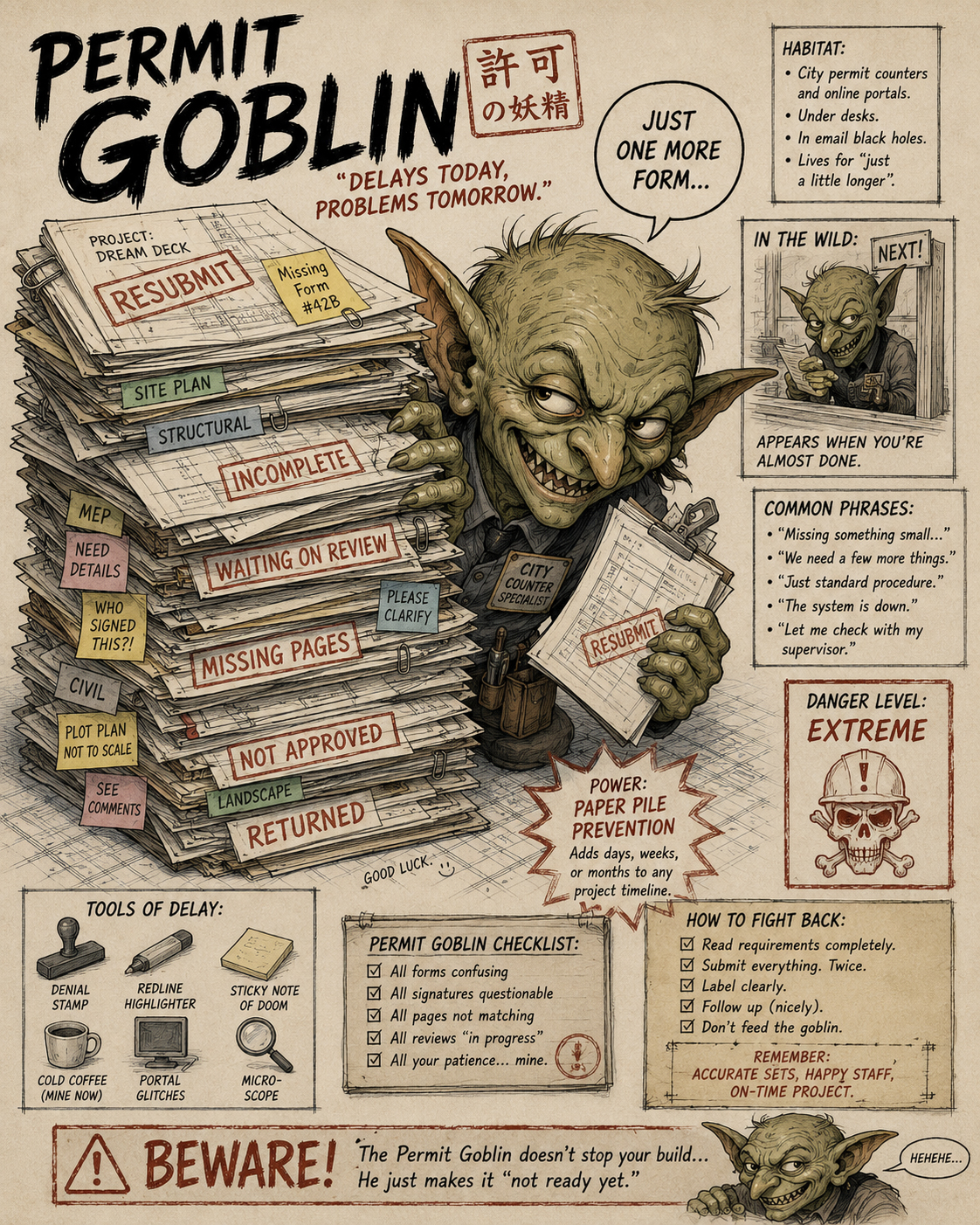
Permit Goblin hiding behind stamped plans and missing forms
Trap 03

Permit assumptions

Submitted is not approved. Old plan sheets are not the current field set.

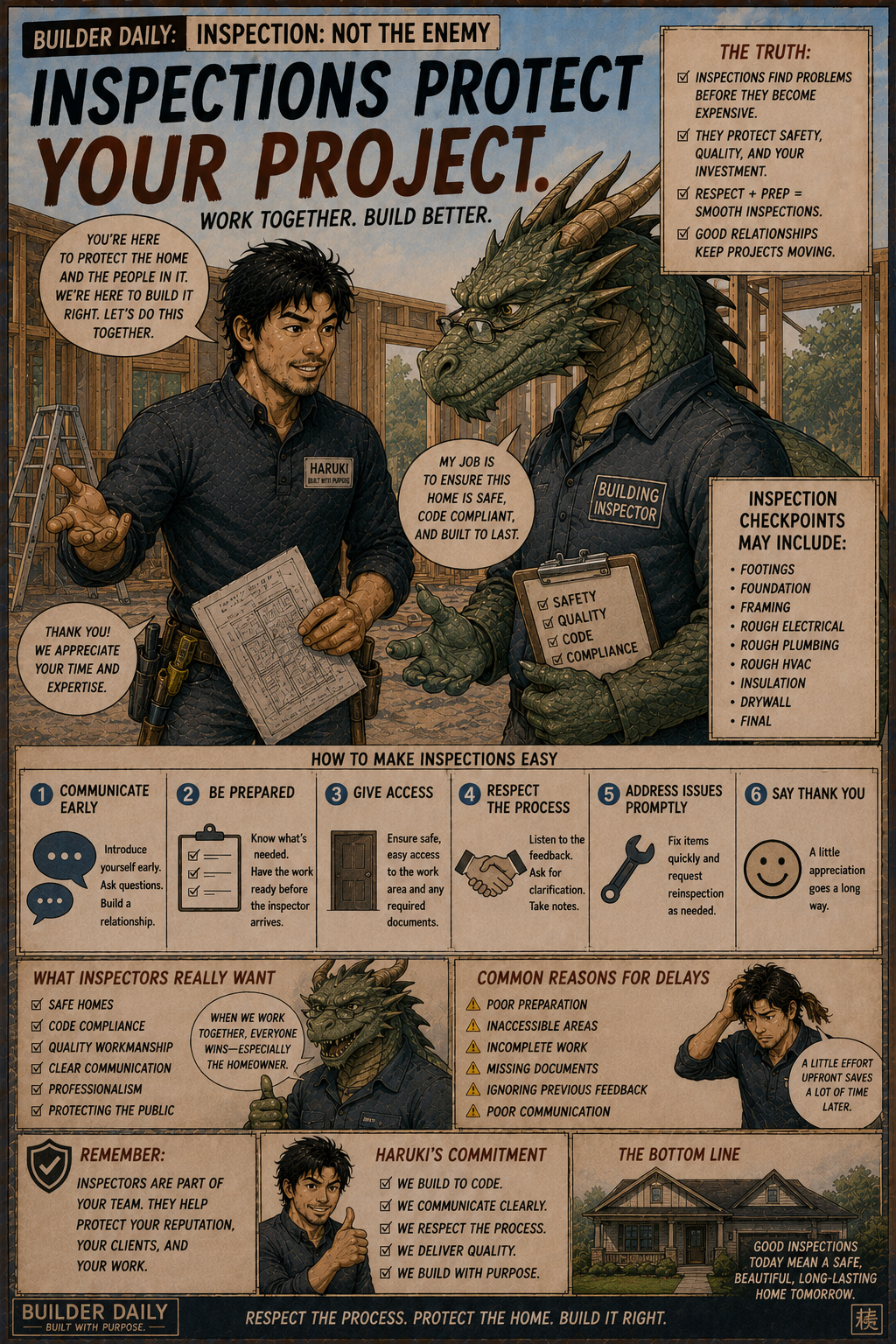
Haruki respectfully working with the Inspection Dragon
Trap 04

Inspection surprises

Work must be ready, visible, documented, and approved before the next phase covers it.

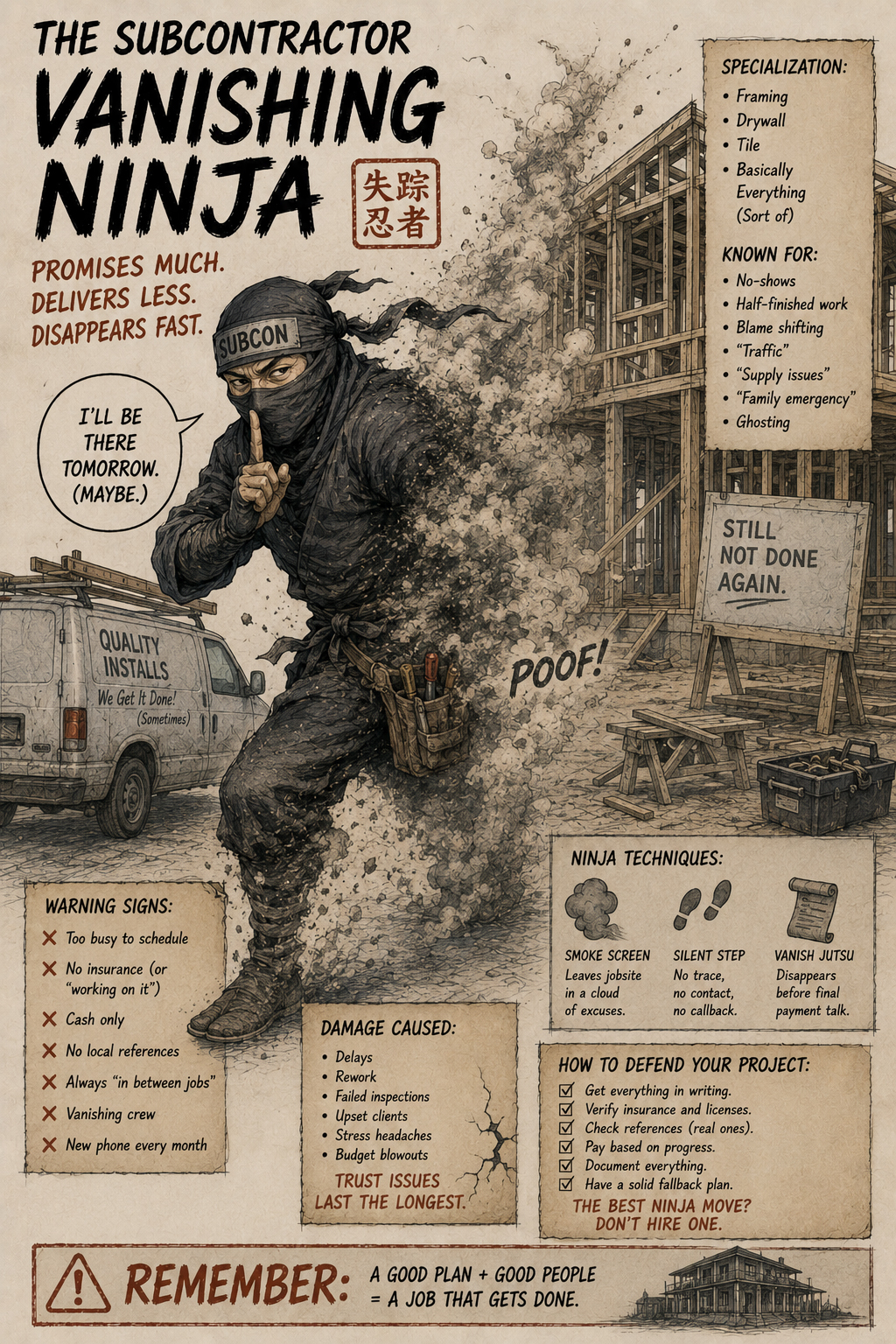
Subcontractor Vanishing Ninja disappearing next to unfinished work
Trap 05

Trade delays

One missed trade window can affect several steps that come after it.

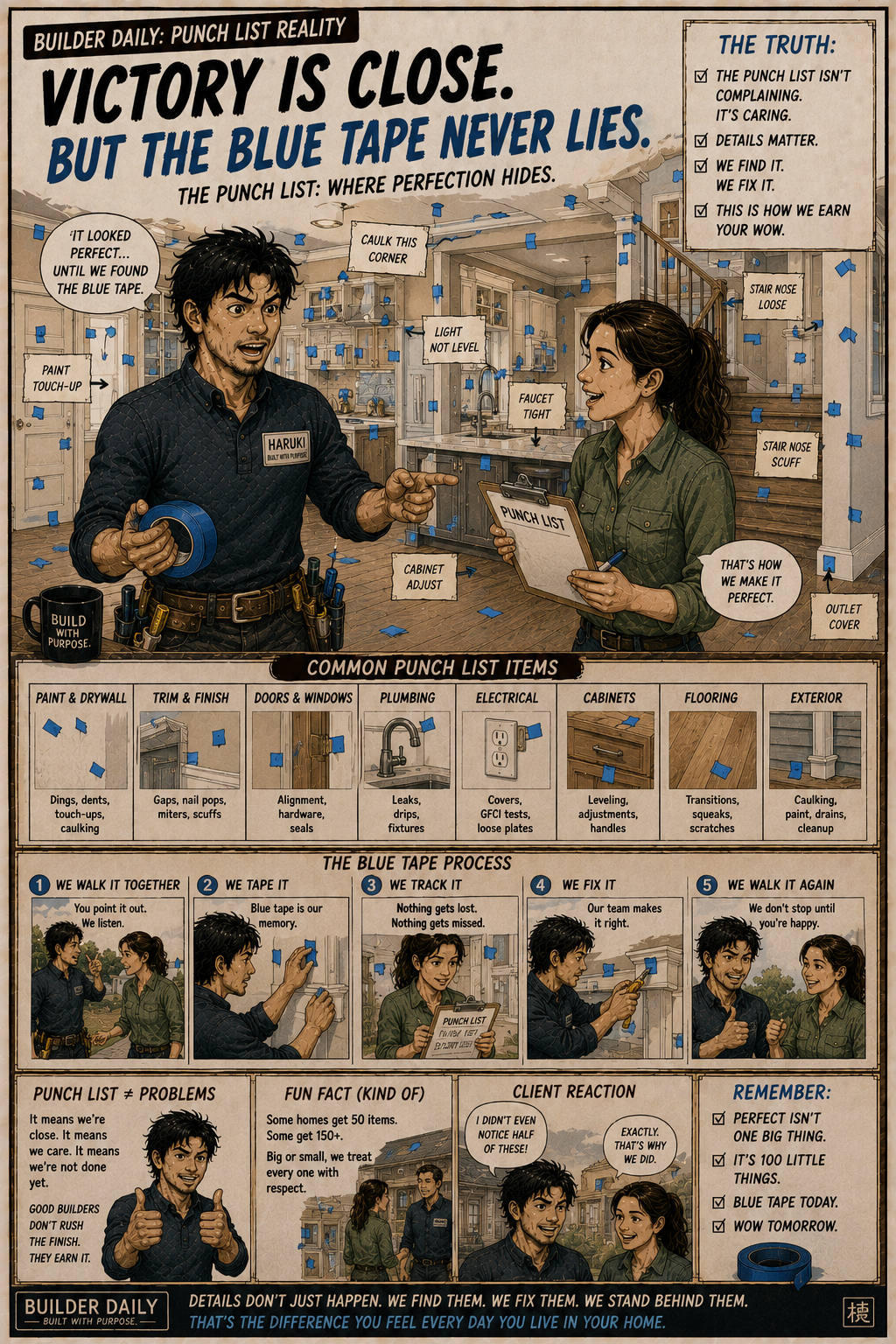
Finished house covered in blue tape markers like a manga battlefield
Trap 06

Punch list drift

Closeout still needs time, labor, materials, and clear responsibility.

Change order survival

Ask “what does this affect?” before asking “can we just?”

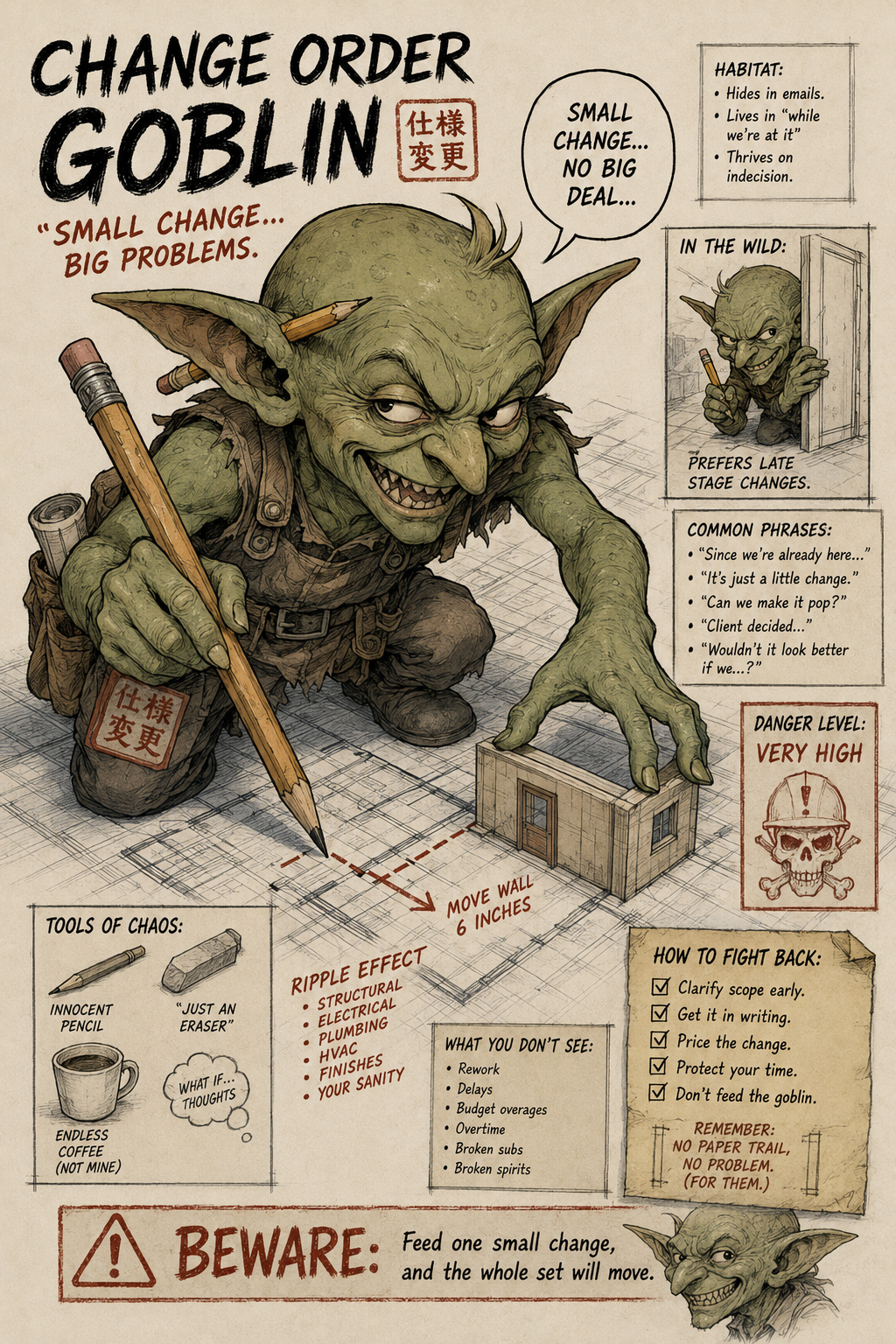
A change may be worth doing. The issue is not whether homeowners can change their minds. The issue is whether the change is priced, scheduled, documented, and understood before work moves.

  • What trades are affected?
  • What does it cost?
  • Does it affect the schedule?
  • Does it affect plans, permits, or inspections?
Sneaky Change Order Goblin holding a pencil and moving walls on a blueprint
Project phase questions

Ask different questions at each stage.

The right question changes as the project moves from paper to dirt to finishes.

Before contract

What is the actual scope?

Ask what is included, excluded, assumed, owner-supplied, permit-related, and allowance-based.

Before start

What decisions are due?

Ask which selections, approvals, access items, utility steps, and permits must be completed before construction begins.

During rough-in

What must stay visible?

Ask what inspections are needed before walls, trenches, ceilings, or slabs are closed or covered.

During finishes

Are selections within allowance?

Ask for overages, credits, delivery dates, installation impacts, and change approvals before ordering.

Before closeout

How is the punch list handled?

Ask who records items, who fixes them, how completion is verified, and what still blocks final approval.

At final

What documents should I receive?

Ask about final approvals, warranties, manuals, lien releases if applicable, and project records.

Builder relationship

The best homeowner-builder relationship is clear, not magical.

A good builder should be able to explain what is happening, what decisions are needed, what changed, what it costs, what inspection comes next, and what could delay the work.

A good homeowner helps by making timely decisions, asking direct questions, respecting written processes, and not turning every field conversation into an undocumented change.

Haruki directing framers, electricians, plumbers, and inspectors like a battlefield general
Important

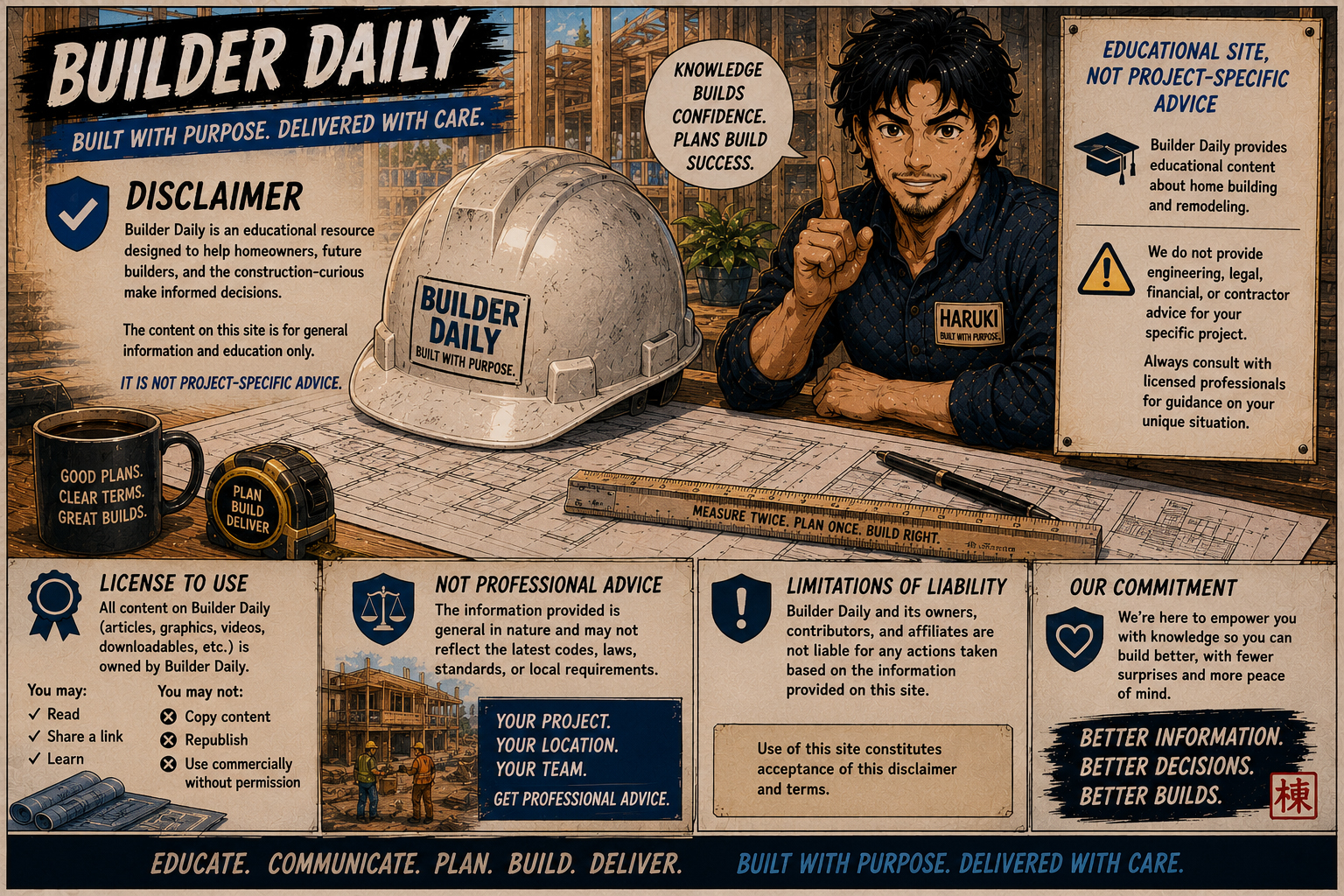
Educational guide, not project-specific advice.

BuilderDaily.com provides general educational construction concepts in manga-comedy form. It is not a substitute for licensed professional advice, approved plans, engineering, architecture, legal review, permits, inspections, contracts, or local authority requirements.

Hard hat, construction plans, ruler, and educational site disclaimer visual