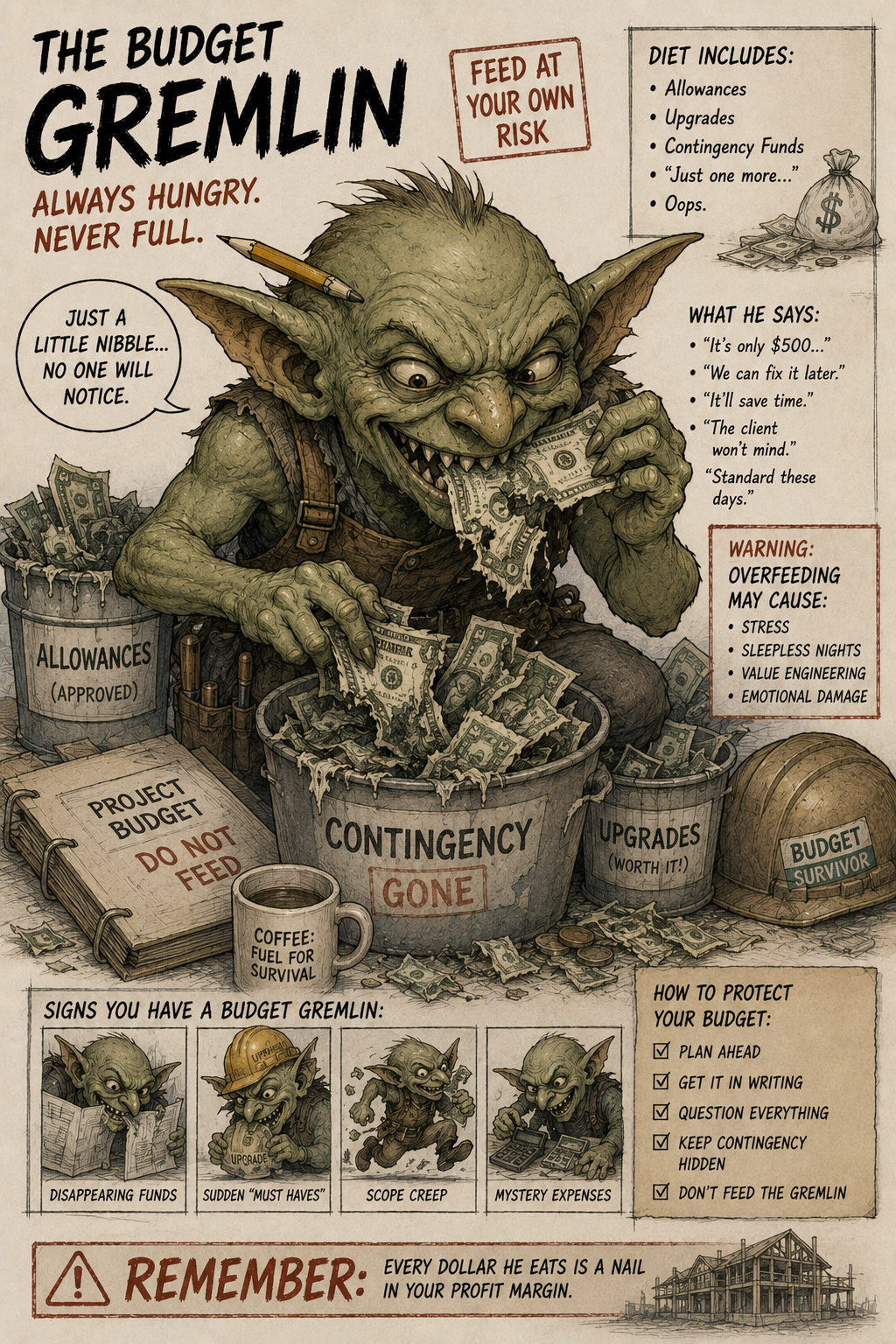
The budget does not explode. It gets eaten.
Budget problems often arrive as a hundred tiny upgrades. The gremlin does not need one giant mistake. He needs one unclear allowance, one emotional selection, and one “it is only a little more.”
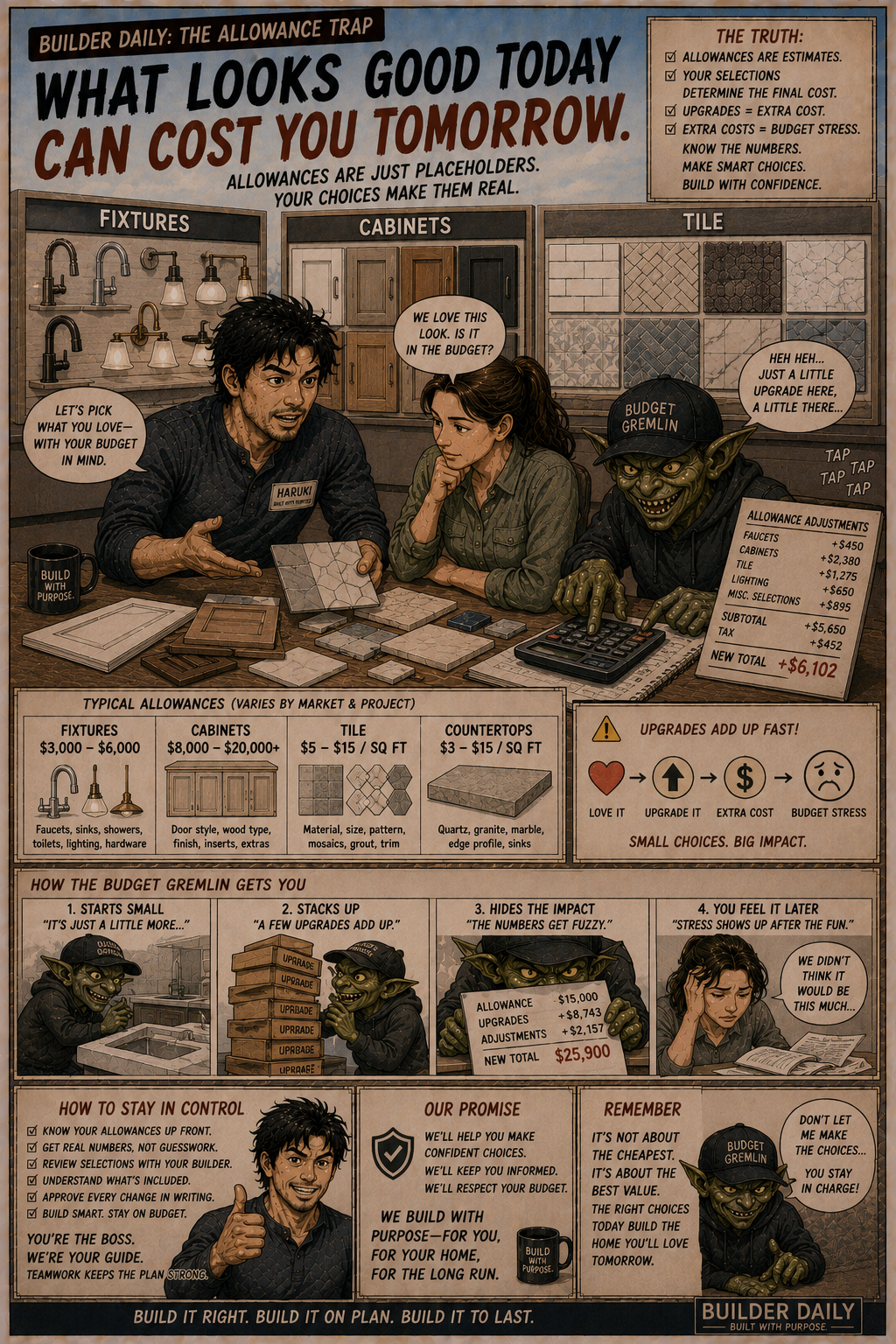
The job survived scope, permits, trades, and inspection. Then the homeowner enters the finish showroom. Cabinets sparkle. Tile glows. Fixtures whisper. The Budget Gremlin smells the allowance sheet and opens his mouth.
Budget problems often arrive as a hundred tiny upgrades. The gremlin does not need one giant mistake. He needs one unclear allowance, one emotional selection, and one “it is only a little more.”
Episode 6 teaches that finish selections need transparent math before beautiful choices become permanent costs.
The homeowner steps into the finish showroom. Cabinets shine. Tile samples sparkle. Haruki feels the air change. Somewhere near the quartz slabs, something giggles.
“This cabinet door is only a little more,” says the display. The Budget Gremlin chews one corner of the allowance and wipes his mouth with a receipt.
The selected tile needs special trim, a different layout, more cuts, upgraded setting material, and extra labor. The gremlin grows three inches taller.
Faucets, lights, pulls, mirrors, sinks, shower valves, and appliances march across the table. Each carries a tiny flag that says “upgrade.”
Haruki opens the ledger. Material, tax, freight, install, trim, labor, schedule, and overage all step into the light. The gremlin hates daylight.
Some upgrades stay. Some get cut. Credits are shown. Overage is approved. Contingency is protected. The gremlin mutters, “I preferred the old spreadsheet.”
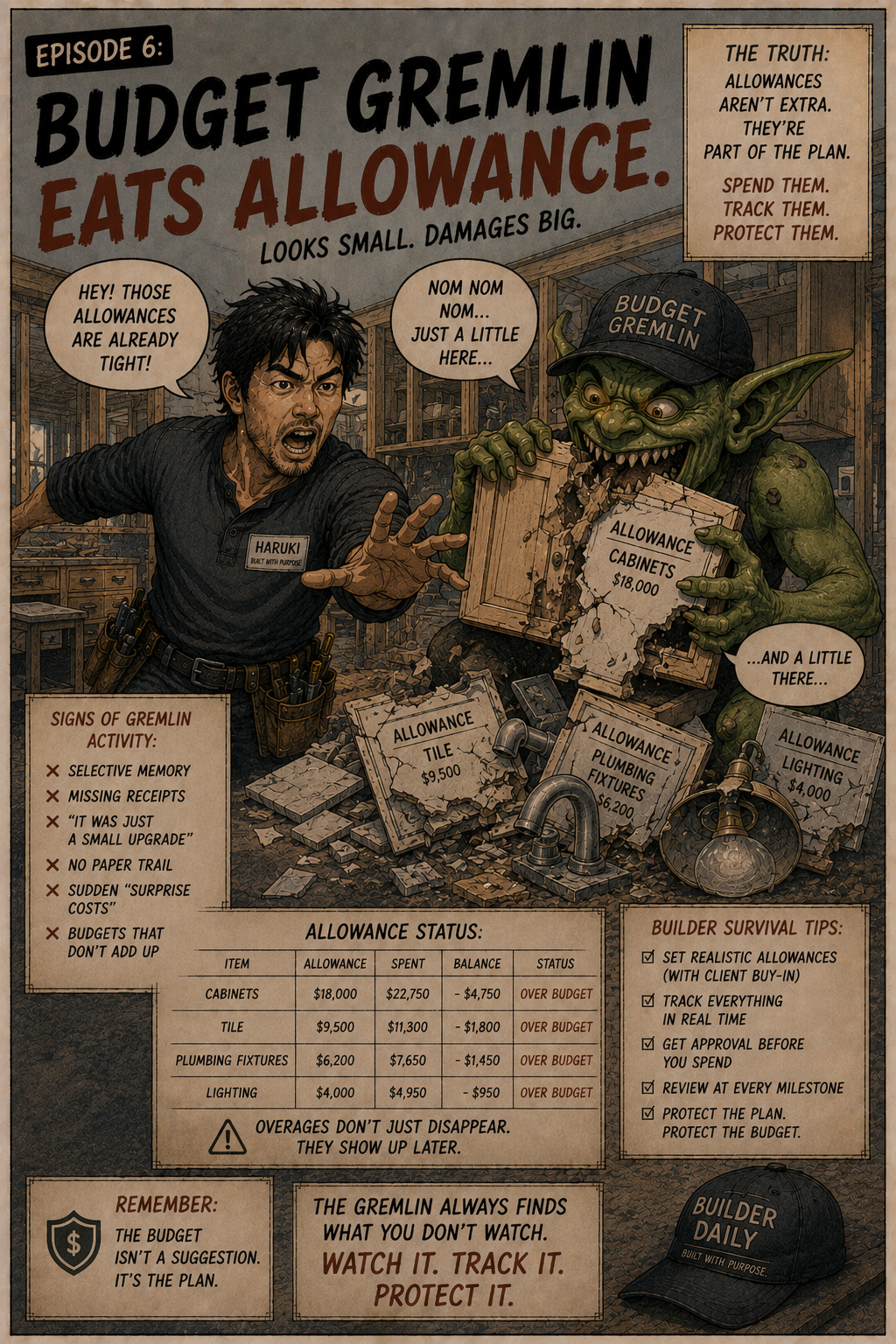
Finish budgets creep when the category is vague and the installed cost is not tracked.
Door style, finish, inserts, panels, trim, fillers, hardware, and install details.
Material price, layout, trim, waterproofing, cuts, setting materials, grout, and labor.
Faucets, valves, sinks, drains, accessories, rough-in compatibility, and install time.
Decorative fixtures, dimmers, controls, switching, low-voltage, placement, and lead times.
Cabinet openings, gas, plumbing, electrical, ventilation, delivery, and finish coordination.
Money for unknowns. Not the upgrade cookie jar. Do not feed the gremlin with it.
A good allowance process tracks selections, overages, credits, taxes, freight, labor impacts, lead times, and change approval before the material is purchased.
Installed cost includes labor, trim, layout, delivery, prep, schedule impact, coordination, and sometimes rework.
Contingency should protect the project from unknowns. It should not quietly become the showroom upgrade fund.
Homeowners should not be afraid of beautiful selections. The danger is approving choices without seeing the real installed cost and schedule effect.
Define the allowance. Track the selection. Show the overage or credit. Protect the contingency. Approve the change before ordering. That is how the builder keeps the monster small.
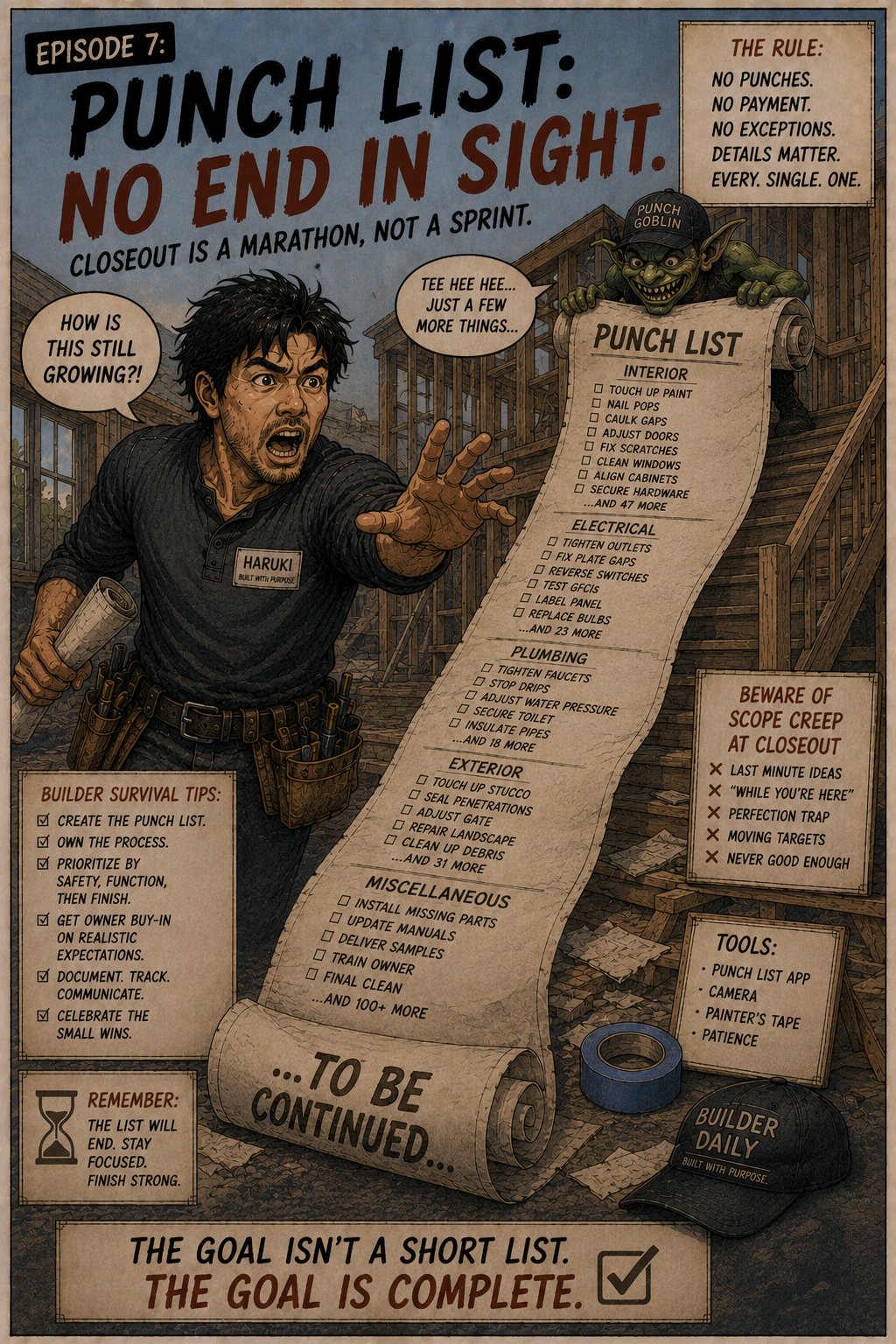
The finishes are installed. The house looks almost done. Then the Punch List Phantom unrolls a scroll of blue tape, tiny fixes, missing covers, paint touchups, and “one last thing.”
BuilderDaily.com is educational manga comedy about construction concepts and builder communication. Budget, allowance, and contract terms vary by project. Always consult licensed professionals, approved plans, contracts, local requirements, and qualified advisors for project-specific decisions.